Bees · City of Casey, Agriculture Victoria
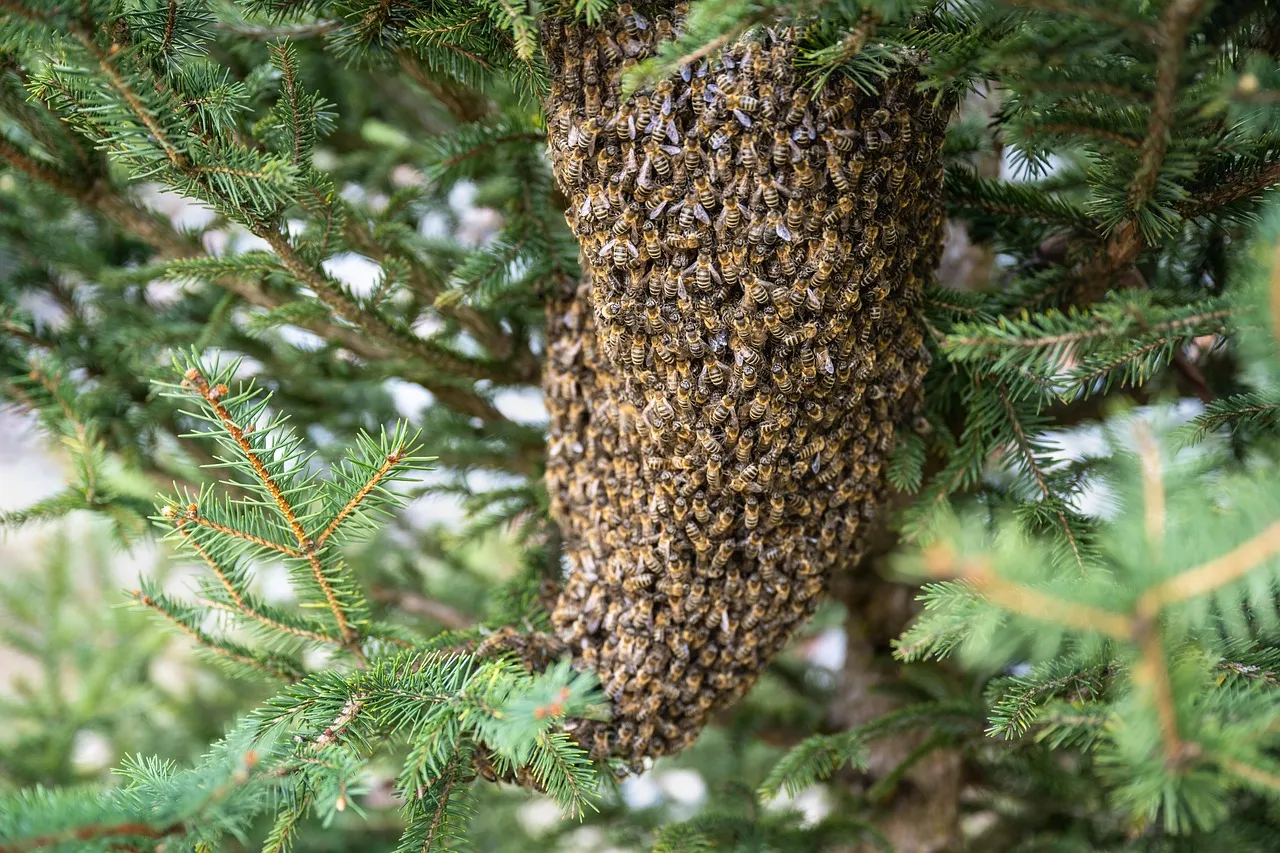
A bee swarm in the garden
A swarm is a group of bees between homes, and the City of Casey says one on your property will usually leave within a couple of days; if it stays several days, the council suggests contacting a beekeeper or a pest controller. In Victoria the beekeeper whose colony it left has a duty of their own: the Apiary Code of Practice requires beekeepers to capture swarms that have left a colony they own.
A guide published by Dotto from City of Casey, Agriculture Victoria and Health Victoria pages. General information, not health or legal advice.
Swarm or hive
The council’s page draws the line between the two.
| A swarm | A hive | |
|---|---|---|
| What it is | Bees between homes, usually in a vertical, football-shaped cluster while scout bees fly out to find a new home | An enclosed structure where bees live, which protects them and their honeycomb from predators |
| Where it is found | Tree branches, roof eaves, hanging from fencing, and elsewhere | Trees, irrigation boxes, roof eaves, wall voids, and elsewhere |
| How long it stays | Usually leaves within a couple of days, and is usually not aggressive unless provoked | It is the bees’ home |
When swarms come
Agriculture Victoria says swarms occur in spring and early summer. The field calendar shows them beside the other pests of those seasons.
What the council’s page suggests
The City of Casey’s page sets out these steps for bees on or near your property.
- Give it a couple of daysA swarm usually leaves within a couple of days, and is usually not aggressive unless provoked.
- If it stays several daysRemoving bees from private property is the owner’s responsibility. For a hive or swarm that has stayed several days, the council suggests contacting a beekeeper (apiarist) or a pest controller.
- If it is next doorLet the neighbour know. If they refuse to have the bees removed, the council can be contacted on 9705 5200.
- If it is on council land or a light poleContact the council for council property, including nature strips. For a light pole, contact AusNet Services, or United Energy in Endeavour Hills, Doveton, Hallam, Eumemmerring, Pearcedale and Cranbourne South.
Health Victoria asks pest control operators to refer bee complaints and enquiries to a beekeeper.
What the beekeeper owes the neighbours
Agriculture Victoria says a beekeeper has a legal and moral obligation to keep bees healthy and in a way that does not make them a nuisance to other people, under the Livestock Disease Control Act 1994, its 2017 regulations and the Apiary Code of Practice 2011. Beekeeping may go ahead without a planning permit if it complies with the Code; if it cannot, a planning permit must come from the local council first. Under the Code, beekeepers must:
- manage their colonies so that swarming is prevented, or kept to a minimum
- catch any swarm that leaves one of their own colonies
- supply water where the bees are kept, if the bees cannot reach any
- keep colonies in urban areas with young, docile queens
- keep within hive density limits for urban properties
- make sure the bees’ flight paths don’t interfere with neighbouring land
- place hives more than 3 metres from a boundary fence, unless a bee-proof barrier over 2 metres high stands on that fence line (no barrier is needed where the land next door is unimproved).
The department’s advice to new beekeepers is to collect their own swarms quickly so they don’t settle in a neighbour’s house or tree. It adds that some beekeepers collect swarms on neighbouring properties even when they know the bees are not theirs, and that it is good biosecurity practice to quarantine and watch a new colony before it joins an apiary, to keep out diseases such as American foulbrood.
Every hive is registered
In Victoria, every beekeeper must be registered with Agriculture Victoria, even someone with a single hive. The City of Casey’s page says the same to anyone thinking of becoming a beekeeper.
- Fees
- As part of a drought support package, registration fees are waived for two years from 1 October 2025, according to the department’s page in March 2026.
- How
- Through BeeMAX, the department’s registration and surveillance database, or on a paper form.
- Records
- Keeping a record of biosecurity activities, such as pest and disease inspections and the movement of bees and equipment, is now mandatory; the BeeMAX diary is one way to meet that duty under the Livestock Disease Control Regulations 2017.
- Certificate
- Shows the beekeeper’s registered number, which the department calls a brand, and the expiry date.
Agriculture Victoria notes that European wasps can easily be mistaken for honey bees. Health Victoria’s comparison: bees have rounder, usually hairy bodies and hairy legs; wasps are usually slender and smooth, with few hairs on their legs. European wasps in Casey covers the nests.