Wasps · Agriculture Victoria, Health Victoria, City of Casey
European wasps in Casey
In the City of Casey, having bees or wasps removed from private property is the property owner’s responsibility, and for a nest that has stayed several days the council suggests a pest controller or a beekeeper. Health Victoria’s guidance, written for pest control operators, is that the best control is to find the nest and destroy it with an insecticide registered for the purpose.
A guide published by Dotto from Victorian Government and City of Casey pages. General information, not health advice. For a sting, follow your doctor or emergency services.
How it reached Melbourne
Agriculture Victoria says the European wasp, Vespula germanica, was first sighted in Melbourne in 1977 and within five years had colonised much of greater Melbourne. By the 1990s it was established through most other parts of Victoria. It has spread so widely that the department now treats it as naturalised and no longer a notifiable pest in Victoria.
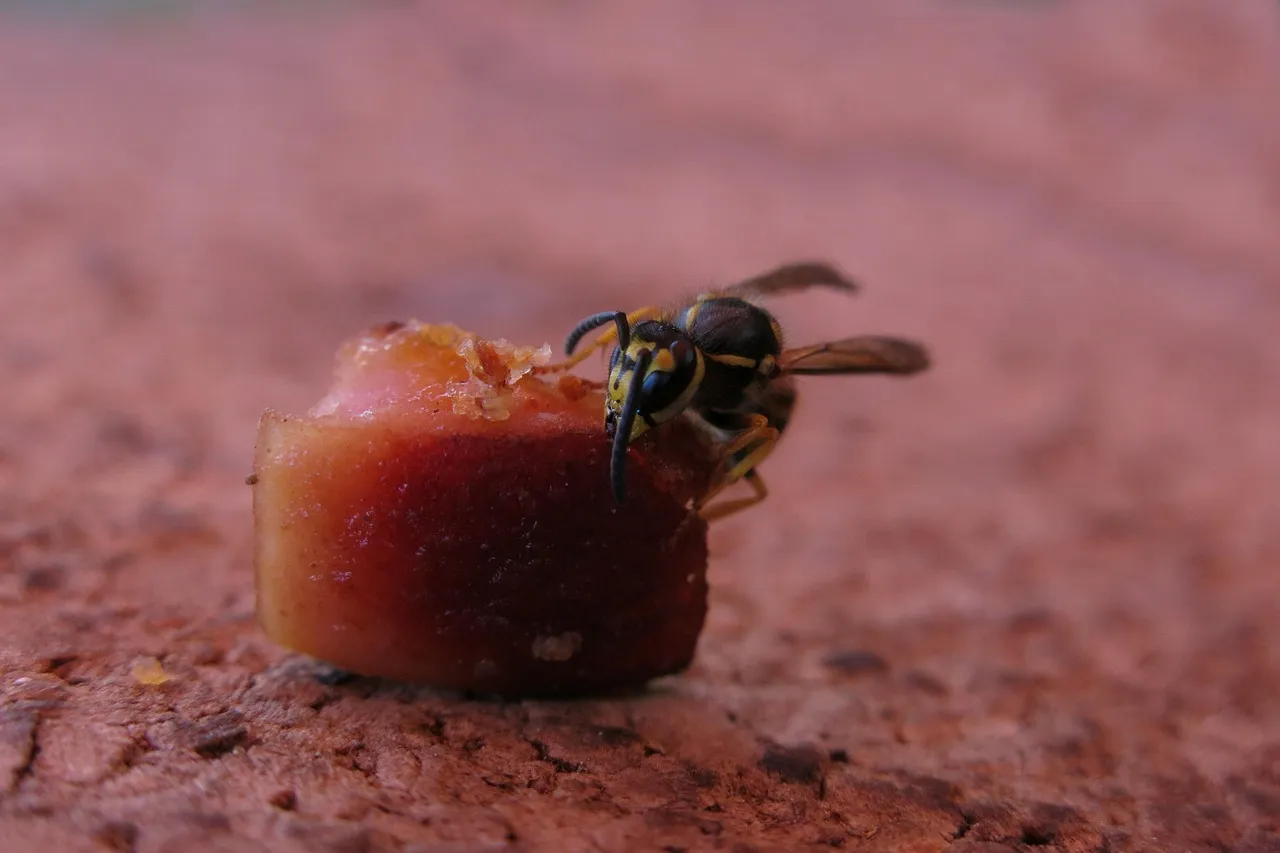
It is a scavenger that prefers to live alongside people and share their food. The department lists carrion, insects, spiders, fruit, human food and garbage among what it eats.
Where the nests are
About 80 per cent of European wasp nests are in holes in the ground or close to it. Agriculture Victoria’s list of places:
- around the base of trees and along hedges
- inside retaining walls and rockeries
- under compost heaps
- in and around disused hard rubbish.
The other 20 per cent are inside buildings, in a roof or wall cavity, or in sheltered spots around them. Nests in the ground often look like footballs, and the walls have a papery look because they are made from chewed wood pulp and saliva. Health Victoria adds that a nest made of mud is not a European wasp nest.
The nest may not be on the property where the wasps are a nuisance. A European wasp may forage up to half a kilometre from its nest, and Health Victoria notes that finding one can take the cooperation of neighbours. Both departments describe how a nest is traced: food is set out in plain view, and a wasp that finds it flies almost in a straight line back home.
Unlike a honey bee, a European wasp can sting repeatedly, especially if its nest is disturbed. Health Victoria’s treatment advice for operators includes protective clothing and a bee veil, and working early in the morning or at night when wasps are less active. The Victorian Government’s Better Health Channel strongly recommends having a licensed pest control operator destroy any wasp nest on your property, above all if you have reacted to a sting before, or have never been stung and do not know whether you are allergic.
Whose nest it is in Casey
The City of Casey’s page sets the responsibility by where the nest is.
- Your property
- Removing it is the owner’s responsibility. If a nest has stayed several days, the council suggests contacting a pest controller or a beekeeper.
- Someone else’s property
- Let them know. If they refuse to have it removed, the council can be contacted on 9705 5200, and it will investigate if you believe the wasps are a risk to the public.
- Council property, including nature strips
- Contact the council.
- A light pole
- Contact the energy company: AusNet Services for most of Casey, or United Energy in Endeavour Hills, Doveton, Hallam, Eumemmerring, Pearcedale and Cranbourne South, with the pole’s address and what the issue is.
- A Telstra pit
- Report it to Telstra.
Health Victoria tells pest control operators to refer bee enquiries to a beekeeper, and tells beekeepers, who are not licensed to use pesticides, to refer wasp enquiries to a licensed pest control operator when they cannot physically remove the nest. How to check a pest control licence.
Victoria’s look-alikes
Agriculture Victoria compares the European wasp with three paper wasps found in Victoria. The quickest tell in its table is the antennae: black on the European wasp, yellow on the paper wasps.
| Wasp | Where it comes from | Its nest |
|---|---|---|
| European wasp | Introduced; native to Europe, North Africa and temperate Asia | Mostly in or near the ground, papery, often football-shaped |
| European paper wasp | Introduced; first found in Australia in 1986 | An upside-down umbrella with open cells visible from below, in sheltered spots such as eaves, attics and wall voids |
| Asian paper wasp | Introduced; recorded in Victoria in recent years | In the open: trees, house eaves, fence posts; up to 10–12 cm across |
| Australian paper wasp | Native to south-eastern mainland Australia | The department notes it will aggressively defend its nest |
The warning about home-made baits
In a media release of 4 November 2015, Agriculture Victoria urged Victorians not to make illegal home-made wasp baits from veterinary chemicals, after recipes were published online. Its chemicals specialist, from the then Department of Economic Development, Jobs, Transport and Resources (DEDJTR), said the baits posed an unacceptable risk to other animals, the environment and people, that the instructions had not been assessed by the Australian Pesticides and Veterinary Medicines Authority, and that, under the Agricultural and Veterinary Chemicals (Control of Use) Act 1992, giving out instructions which lead someone to commit an offence is itself an offence. For anyone troubled by wasps, the department pointed to products registered for wasp control, or to a licensed contractor.
Keeping wasps from the table
Health Victoria’s list for people with a wasp problem:
- don’t leave fallen fruit, food scraps, uneaten pet food or dog bones lying in the yard
- keep tight-fitting lids on rubbish bins, and keep compost covered
- cover swimming pools when they are not in use
- cover food at picnics and barbecues
- drink from clear containers or through a straw rather than from cans or bottles.
If someone is stung
Health Victoria says most people without an insect allergy have only minor symptoms, but a small percentage have anaphylaxis, and that for life-threatening symptoms such as anaphylactic shock you should call emergency services on 000 immediately. The Better Health Channel’s advice is the same: “In cases of severe allergic reaction, call triple zero (000).” For a pet that has been stung, Agriculture Victoria suggests keeping the animal as quiet as possible and getting veterinary treatment as soon as possible if it is distressed.